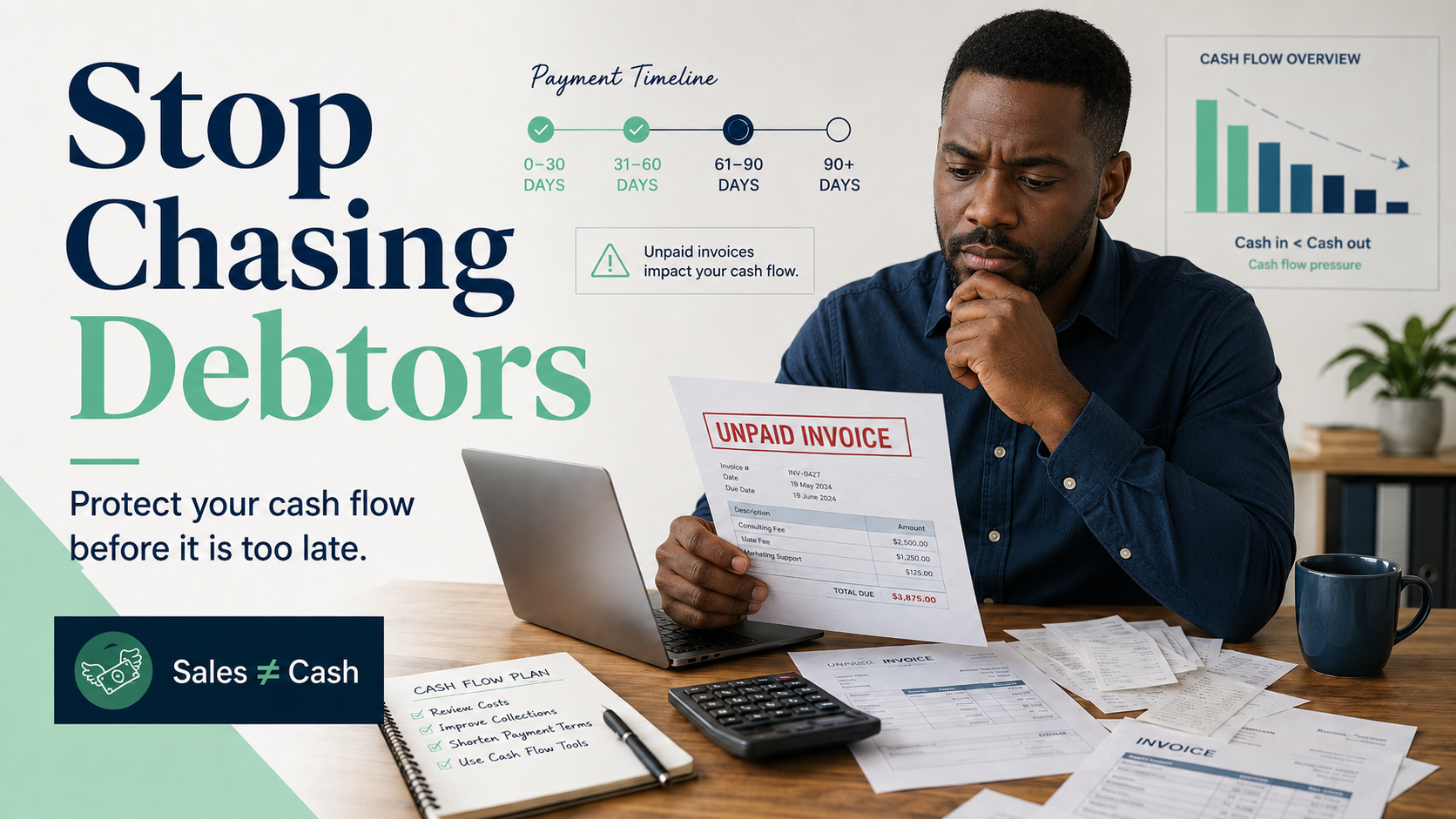
For many small businesses, making a sale feels like a win. A client places an order, a service is delivered, or a project is completed. But here is the hard truth: sales do not always mean cash.
A business can have customers and still struggle if those customers delay payment. This is why unpaid invoices are not just annoying. They can quietly damage the financial health of a business. The carousel highlights this clearly by showing that unpaid invoices can become a silent threat to small business cash flow.
A Simple Case Study: Ama’s Catering Business
Ama runs a small catering business. She receives an order to provide food for a corporate event. The client sounds serious, the event is urgent, and Ama wants to impress them. Because she does not want to lose the opportunity, she agrees to start work without collecting a deposit.
She buys ingredients, hires extra hands, pays for transport, and delivers the food on time. The event goes well, and the client promises to pay the following week.
One week becomes two weeks. Two weeks become one month.
Meanwhile, Ama still has to pay her workers. She also needs money to buy stock for other orders. Because the client has not paid, she is forced to use her personal savings to keep the business running. A good sale has now become a financial burden.
This is the reality many small businesses face. The problem is not always a lack of customers. Sometimes, the real problem is a poor payment structure.
Sales Are Not the Same as Cash
A business can record sales and still have no money available. This happens when customers buy on credit or delay payment after receiving goods or services.
Cash flow is what keeps the business alive. It helps entrepreneurs buy materials, pay workers, restock products, deliver on time, invest in growth, and keep operations running. When payments are delayed, the business owner carries the pressure.
Fix Your Payment Terms
One way to avoid this problem is to set clear payment terms from the beginning.
Before starting any project, delivering goods, or offering a service, there should be a written agreement. This agreement should clearly state when payment is due. It could be immediate payment, 15 days after delivery, or 30 days after delivery.
What matters most is that both parties understand and agree before the work begins.
Use the Deposit Shield
For customised goods, long-term services, or projects that require upfront investment, business owners should consider using a deposit system.
A simple structure like 50% upfront and 50% before final delivery can protect the business from unnecessary losses.
The first payment helps cover basic costs. The final payment ensures that the business is not left chasing the client after the work has already been completed.
Protect Your Business
Business owners should also review their unpaid invoices regularly. Know who owes you, how much they owe, and how long the payment has been outstanding.
If a client is always late with payment, it may be time to review the relationship or restructure their payment terms.
Clear boundaries do not chase away good customers. They help build trust, professionalism, and accountability. Serious customers will respect clear terms because they understand that businesses need cash to operate well.
Final Thoughts
At HapaSpace, we believe entrepreneurs need more than ideas. They need structure, support, and practical systems that help them grow sustainably.
Protecting cash flow is one of those systems. A business that manages payment well is better positioned to serve customers, create jobs, and grow.
So this week, take a moment to review your payment terms. Check your unpaid invoices. Look at your client payment patterns. Then make the necessary changes.
Your business deserves to grow without constantly chasing debtors.
1 comment
Philipina
Great piece. Keep it up